The Silent Details in Tanjore Paintings That Most People Don’t Notice
Jun 16, 2026
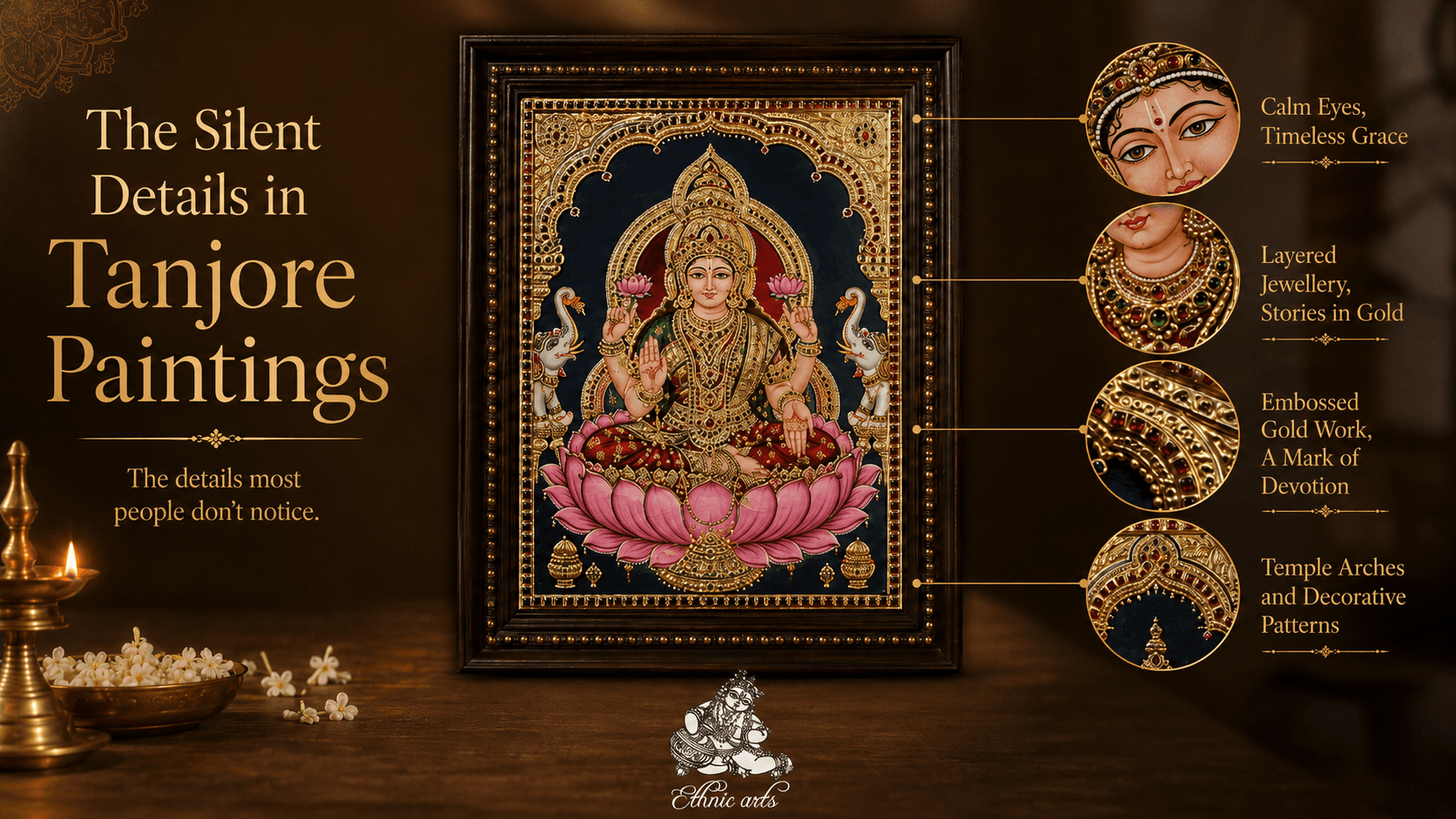
Tanjore paintings are often admired for their rich gold work, bright colours, divine subjects, and traditional beauty. At first glance, they look grand and decorative. But when you observe them closely, you begin to notice something deeper.
Every Tanjore painting carries silent details that tell a story. The expression of the deity, the posture, the ornaments, the background arch, the use of gold foil, and even the way the eyes are painted all add meaning to the artwork. These details may look small, but they are what make Tanjore paintings feel sacred, emotional, and timeless.
A handmade Tanjore painting is not just created to fill a wall. It is created to bring devotion, culture, and divine presence into a space.
The Divine Expression
One of the most powerful details in a Tanjore painting is the expression of the deity. The face is usually calm, graceful, and full of compassion. Whether it is Lord Krishna, Goddess Lakshmi, Lord Ganesha, Lord Balaji, or Goddess Saraswathi, the expression is designed to create a sense of peace.
This calmness is not accidental. It reflects the divine nature of the subject. The soft eyes, gentle smile, and balanced facial features help the viewer feel connected to the painting. Many people may notice the colours and gold first, but the real emotion of the painting often lies in the face.
The Eyes That Create Connection
In traditional Indian art, the eyes hold great importance. In Tanjore paintings, the eyes of the deity are often painted with care and precision. They are not just decorative features; they create a feeling of presence.
When placed in a pooja room, living room, or sacred corner, the painting often feels alive because of the way the eyes are shown. The gaze may look calm, protective, loving, or powerful depending on the deity. This is one of the quiet details that gives Tanjore paintings their spiritual depth.
The Meaning Behind the Jewellery
Tanjore paintings are known for their heavy ornamentation. Crowns, necklaces, earrings, bangles, waist belts, and decorative borders are beautifully highlighted using stones and gold foil. But these ornaments are not added only for richness.
They represent divinity, royalty, abundance, and sacred beauty. The crown shows divine authority. The jewellery reflects prosperity and grace. The ornamental details remind us that the deity is not shown as ordinary, but as a powerful and blessed presence.
This is why Tanjore paintings have a royal look. The grandeur supports the spiritual feeling of the artwork.
The Power of Gold Foil
Gold is one of the most noticeable elements in Tanjore paintings. But beyond beauty, gold carries meaning. It represents purity, light, prosperity, and divine energy.
The gold work often appears around the deity, on the ornaments, throne, arch, and background details. When light falls on the painting, the gold softly reflects and gives the artwork a glowing effect. This glow is one reason Tanjore paintings feel so special in traditional homes and prayer spaces.
The gold does not simply decorate the painting. It enhances the sacred presence of the deity.
The Posture of the Deity
Another silent detail is the posture. Every deity is shown in a specific way. Lord Ganesha may be seated with a blessing hand. Goddess Lakshmi may be shown holding lotus flowers, symbolising wealth and purity. Goddess Saraswathi may be shown with the veena, representing knowledge and art. Lord Krishna may be shown with the flute, symbolising love and divine joy.
These postures are not random. They help tell the story of the deity. Even without reading any explanation, a viewer can understand the blessing, strength, wisdom, or peace represented in the painting.
The Background Arch and Throne
Many Tanjore paintings include a decorative arch, throne, or temple-like background. These details create a sacred setting around the deity. The arch often gives the feeling of a temple sanctum, making the painting look devotional rather than just artistic.
This is one reason Tanjore paintings are deeply connected to worship and tradition. The deity is not shown in an empty space. The surrounding details create a divine atmosphere.
The Use of Colours
Tanjore paintings usually use rich and traditional colours such as red, green, blue, gold, and deep earthy tones. Each colour adds mood and meaning to the artwork.
Red often brings energy and auspiciousness. Green can represent harmony and growth. Blue is often associated with divinity and calmness, especially in Krishna paintings. Gold adds richness and sacred brightness.
The colours are chosen to support the emotion of the painting. A good Tanjore painting does not feel loud; it feels balanced, warm, and spiritually pleasing.
The Small Decorative Patterns
When you look closely at a Tanjore painting, you may notice small patterns in the clothes, borders, jewellery, and background. These tiny details take time and patience to create.
They show the skill of the artist and the handmade nature of the painting. Unlike printed artwork, handmade Tanjore paintings carry small artistic variations that make each piece unique. These details give the painting character and authenticity.
Why These Details Matter
The beauty of a Tanjore painting is not only in its grand appearance. It is in the way every element works together. The face creates emotion. The eyes create connection. The gold creates divine glow. The ornaments create royalty. The posture tells the story. The colours create harmony.
Together, these details transform the painting into something more meaningful than décor. They make it a piece of devotion, tradition, and cultural memory.
Bringing Sacred Art Into Your Home
A Tanjore painting can change the feeling of a space. Whether placed in a pooja room, living area, entrance, or traditional décor corner, it brings warmth and spiritual beauty. But the real charm is experienced when you slow down and observe the details.
The next time you look at a Tanjore painting, do not only see the gold and colours. Notice the eyes, the smile, the ornaments, the posture, and the quiet story behind the artwork.
That is where the true beauty of Tanjore paintings lives.
Conclusion
Tanjore paintings are timeless because they carry devotion in every detail. What many people see as decoration is actually a language of faith, culture, and craftsmanship.
The silent details are what make each painting special. They remind us that traditional art is not just made to be seen. It is made to be felt.
At Ethnic Tanjore Arts, every Tanjore painting celebrates this beautiful connection between art, devotion, and heritage. Explore handcrafted divine artworks that bring sacred beauty and traditional elegance into your home.
