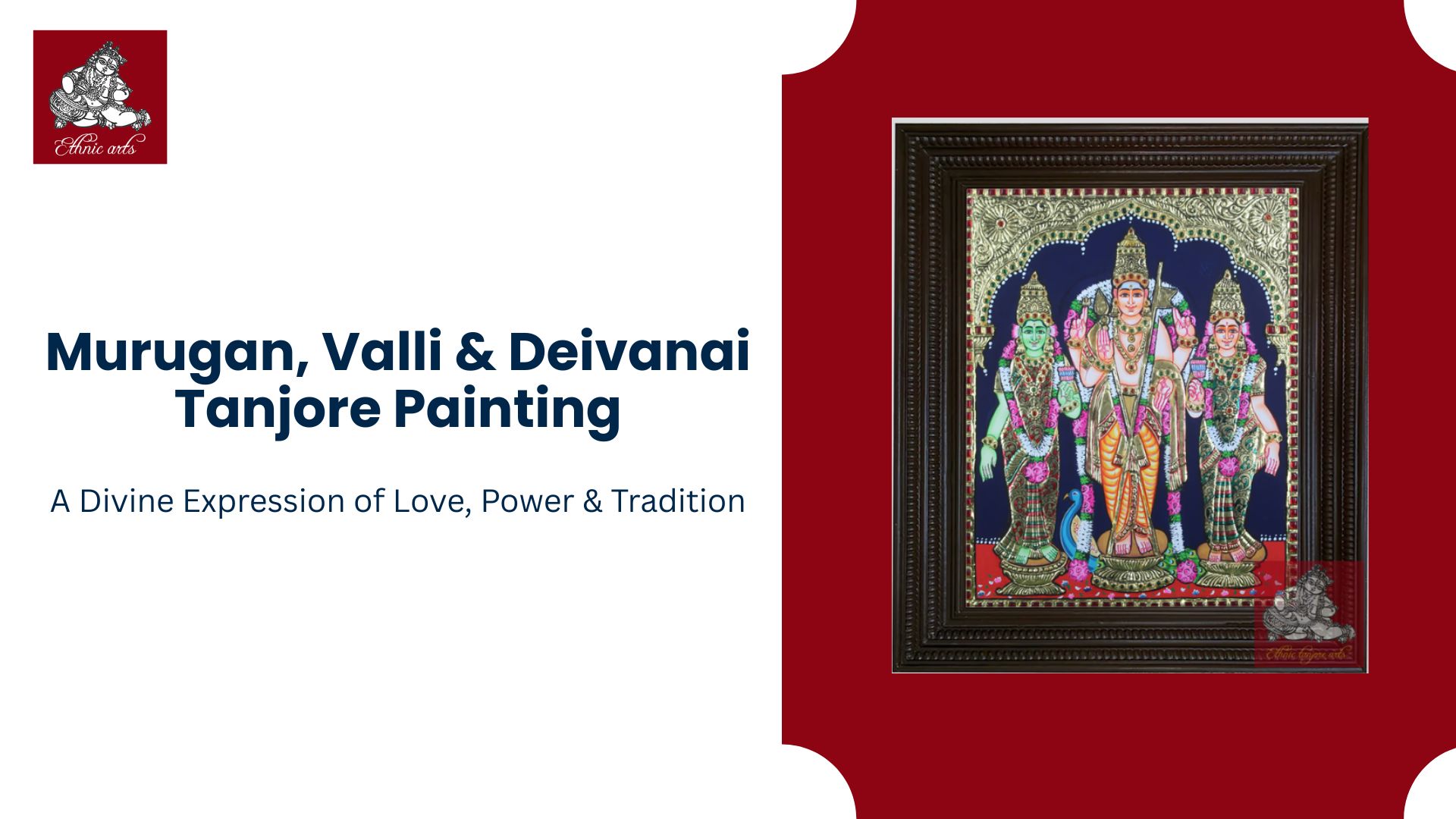
Murugan, Valli & Deivanai Tanjore Painting: A Divine Expression of Love, Power & Tradition
Indian art has always been deeply rooted in spirituality, symbolism, and storytelling. Among its many classical forms, Tanjore Painting stands out for its rich textures, vibrant colors, and divine themes.
One of the most powerful and meaningful subjects in this art form is Murugan with his consorts Valli and Deivanai. This sacred trio represents not just divinity, but a beautiful balance of love, power, and spiritual wisdom.
A Murugan Valli Deivanai Tanjore painting is more than just decor; it’s a symbol of protection, prosperity, and devotion.
The Divine Story Behind Murugan, Valli & Deivanai
Murugan, also known as Kartikeya or Subramanya, is revered as the god of war, wisdom, and victory. He is especially worshipped in South India and holds deep cultural significance in Tamil traditions.
He is depicted with two consorts:
Deivanai – Symbolizes divine order, discipline, and celestial power. She is believed to be the daughter of Indra, king of the gods.
Valli – Represents earthly love, desire, and human connection. She is a tribal princess, symbolizing simplicity and devotion.
Together, they represent the union of heavenly and earthly energies, making the trio a powerful spiritual symbol.
What Makes Tanjore Paintings Unique?
Tanjore Painting originated in Tamil Nadu and dates back to the Chola period. These paintings are known for their distinctive features:
Gold Foil Work
One of the most striking elements is the use of real gold foil, giving the artwork a radiant, divine glow.
Embossed Detailing
The figures are highlighted with raised surfaces, adding depth and richness.
Vibrant Colors
Bold and vivid colors bring life to the deities, enhancing their divine presence.
Spiritual Themes
Most Tanjore paintings depict Hindu gods and goddesses, making them ideal for prayer rooms and sacred spaces.
Symbolism of Murugan with Valli & Deivanai
A painting featuring Murugan, Valli, and Deivanai carries deep symbolic meaning:
Power & Protection
Murugan, holding his divine spear (Vel), represents strength and protection against negativity.
Love & Harmony
Valli symbolizes unconditional love and emotional connection.
Wisdom & Discipline
Deivanai represents structure, knowledge, and spiritual discipline.
Balance of Life
Together, they signify balance between material life and spiritual growth.
Why You Should Have This Painting at Home
Adding a Murugan Valli Deivanai Tanjore painting to your space is believed to bring:
Positive energy and spiritual harmony
Protection from negative influences
Growth in career and personal life
Peace and prosperity in the household
It is especially ideal for:
Pooja rooms
Living spaces
Offices
Gift purposes during festivals and weddings
A Perfect Blend of Art & Devotion
Unlike modern wall art, a Tanjore painting is handcrafted with devotion and precision. Each piece reflects:
Skilled craftsmanship
Cultural heritage
Spiritual significance
This makes it not just an artwork, but a timeless investment in tradition and faith
Choosing the Right Tanjore Painting
When selecting a Murugan Valli Deivanai painting, consider:
Authentic gold foil work
Quality of materials
Detailing and finishing
Traditional design accuracy
Authenticity matters, as genuine Tanjore paintings retain their beauty and value for generations.
The Cultural Significance in Tamil Tradition
In Tamil culture, Murugan holds a special place as the “Tamil Kadavul” (God of the Tamils). Festivals like Thaipusam and Skanda Sashti celebrate his victories and divine grace.
A Tanjore painting of Murugan with his consorts is often seen as:
A blessing for new beginnings
A symbol of family unity
A representation of divine guidance
Final Thoughts
A Murugan Valli Deivanai Tanjore painting beautifully combines art, culture, and spirituality. It tells a story of love, power, and balance while enhancing the aesthetic and spiritual value of your space.
Whether you are an art collector, a devotee, or someone who appreciates traditional craftsmanship, this painting holds timeless appeal.
