How Tanjore Artists Create 3D Embossing Step by Step Explanation
Dec 10, 2025
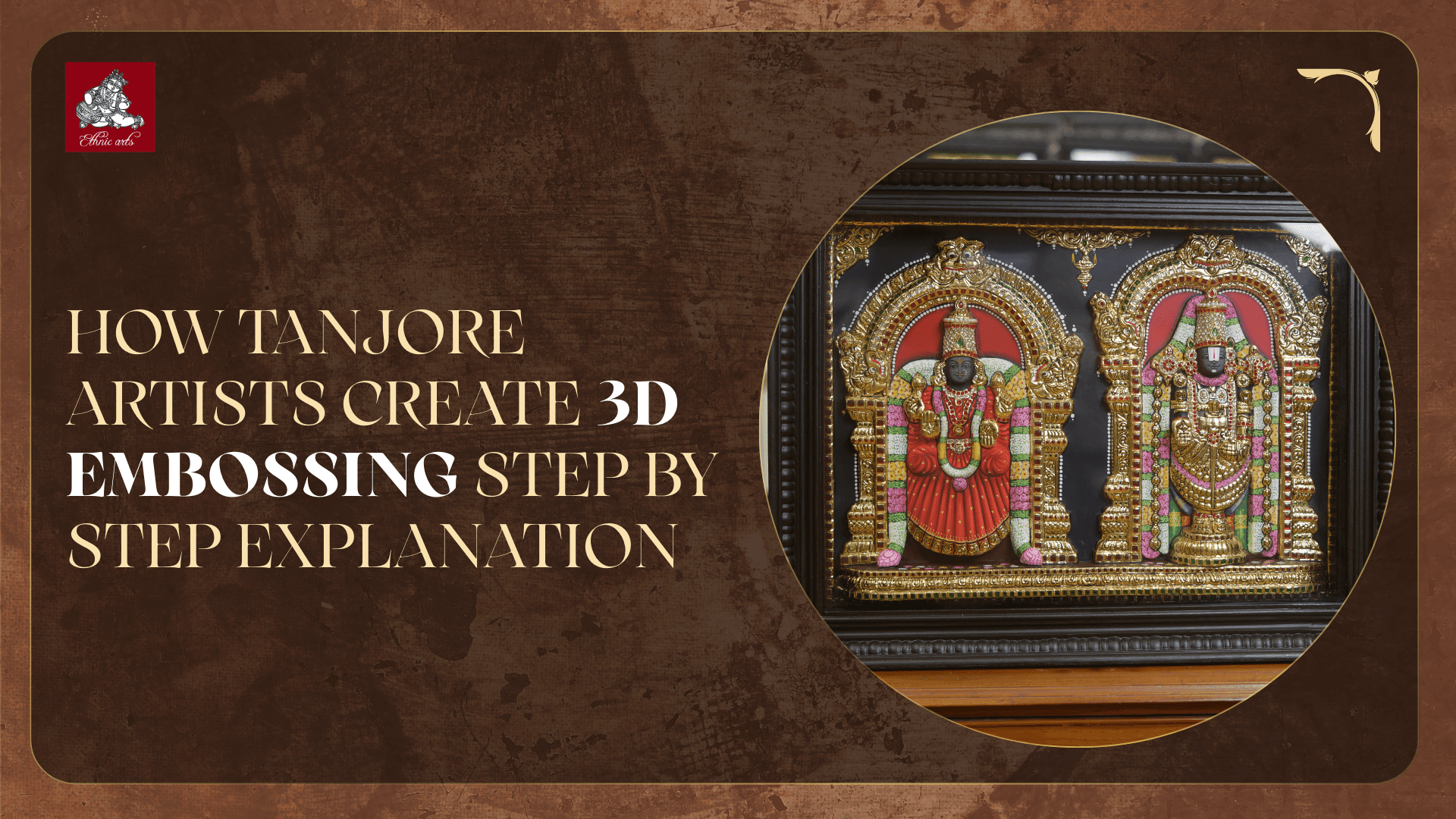
Tanjore painting is one of the most admired traditional art forms in India. It is known for its rich colours, intricate details, real gold foil work, and especially the beautiful 3D embossing that makes every artwork look royal and divine. When you look at a Tanjore painting, the raised effect around ornaments, jewellery, costumes, and temple elements immediately captures your eye. This 3D effect is not accidental. It is a skill that Tanjore artists perfect over years of practice.
In this blog we will explore exactly how artists create this beautiful 3D embossing and what makes the technique so unique. You will also learn the full step by step process followed by professional Tanjore artists so you can understand the effort craftsmanship and dedication behind every masterpiece.
Introduction to 3D Embossing in Tanjore Art
The 3D embossing in Tanjore paintings is created using a mixture of french chalk and adhesive that forms a smooth clay like paste. This paste is applied in layers to give a raised look to crowns ornaments and arches. Once dried the embossed parts are covered with gold foil which makes the design shine beautifully. The process looks simple from outside but requires precision steady hands and a lot of patience.
Every artist follows a slightly different method but the core steps remain the same. Below is the detailed explanation of how experts create 3D embossing in Tanjore paintings.
Step 1 Preparing the Wooden Base
The base of any Tanjore painting is a wooden board. Traditionally artists use plywood or a teak wood board. The board is coated with a mixture of chalk powder and glue which creates a smooth surface for painting.
The mixture is applied evenly using a brush. After drying the artist rubs the surface with sandpaper to get a perfectly smooth finish. This step matters because the smoother the surface the better the embossed work will stand out later.
Step 2 Sketching the Outline of the Deity
Once the board is ready the artist begins with a soft pencil sketch of the chosen deity. The sketch includes every detail like ornaments jewellery headgear costumes and the background arch.
Artists make sure they mark the areas where embossing will be added later. Usually these areas include the crown necklaces bangles earrings thiruvachi and temple pillars.
A neat and accurate sketch is the foundation of a beautiful painting so artists take their time here.
Step 3 Preparing the Embossing Paste
The 3D effect is created by using a special paste made of french chalk and adhesive. The paste should be smooth and lump free. If it is too thick it cracks later. If it is too watery it spreads unevenly.
Artists spend years mastering the perfect consistency. The paste needs to feel like soft dough that can be moulded easily and also hold its shape once applied.
Step 4 Applying the First Layer of Embossing
Using a small brush or a cone the artist applies the first layer of the embossing paste on the sketch. This layer is always thin. Its purpose is to create the outline and structure.
Once this base layer is applied it is left to dry naturally. Some designs may require only one layer but traditional Tanjore work usually requires multiple layers to get the real 3D effect.
Step 5 Building the 3D Effect with Multiple Layers
After the first layer dries the artist builds the shape with the second and third layers of paste. This is the stage where the true 3D effect begins to appear.
Each layer is shaped carefully so that the design looks smooth and symmetrical. Artists often create curves slopes and raised points depending on the ornament design. For example the crown of a deity has multiple small layers that rise gradually to form the final look.
The paste takes time to dry and artists need a lot of patience. Only after it dries can the next layer be added.
Step 6 Carving Fine Details on the Embossed Areas
Once the raised areas are ready the artist uses sharp tools and needles to carve delicate patterns. This step gives life to the design. Artists carve tiny beads floral patterns lines drops and motifs.
These intricate carvings decide how beautiful the final gold foil work will look. Experienced Tanjore artists are able to carve extremely detailed patterns without disturbing the shape of the embossing.
Step 7 Applying a Layer of Gum on the Embossing
After all the carving is done the embossed area needs a binding layer to hold the gold foil. The artist applies a thin layer of adhesive gum over the embossed parts. This gum becomes sticky when slightly dry and helps the gold foil attach firmly.
The timing here is crucial. If the gum is too wet the foil will wrinkle. If it is too dry the foil will not stick properly.
Step 8 Placing the Pure Gold Foil
This is the most iconic part of Tanjore art. Artists use pure gold foil to cover the embossed area. The foil is extremely delicate and must be handled with care. It is gently placed on top of the gum coated embossed parts.
Once placed the artist uses cotton or a soft cloth to press the foil so it sticks smoothly. The shine of the pure gold brings the entire design to life and highlights the 3D effect beautifully.
Excess foil is brushed off carefully and only the embossed design retains the gold.
Step 9 Painting the Deity with Rich Colours
After the gold work is completed the artist begins painting the rest of the artwork. Traditionally natural colours were used but today artists prefer high quality synthetic colours for a richer look.
The colours are applied slowly with multiple coats until the painting gets a bright and glowing finish. The face and eyes of the deity are painted with great attention because they create the expression and soul of the painting.
Step 10 Adding Final Finishing Touches
Once all colours and gold are completed the artist finishes the painting with shading outlines highlights and final touchups. These small details make the painting look balanced proportionate and divine.
Finally the painting is framed using a wooden frame usually with glass. This protects the artwork and enhances its elegance.
Why 3D Embossing Makes Tanjore Paintings Special
The raised work in Tanjore paintings is what makes them stand out among all other traditional art forms. The embossing gives the painting depth and richness. It makes the gold shine more and adds a royal look that instantly catches attention.
Each embossed element is done manually so no two paintings will ever look exactly the same. This uniqueness is one of the reasons why Tanjore art is treasured in homes and temples around the world.
Conclusion
The process of creating 3D embossing in Tanjore paintings is a blend of tradition patience and skill. Each step from preparing the board to applying the final gold foil requires dedication and expertise. The result is a masterpiece that carries history culture and devotion.
Tanjore artists spend years mastering this craft. Their hands create not just a painting but a spiritual artwork that radiates beauty and divinity. Understanding the steps helps us appreciate the tremendous effort behind every Tanjore painting and the value it adds to any home.
